
【Factorio】Switch and PC Differences · Control Tips
Whether to play Factorio on Switch, wait for Switch 2, or go straight for PC. Getting this sorted early saves regret. MOD support points to PC, portable convenience points to Switch, and Space Age ambitions point to Switch 2 or PC.
【Factorio】Switch and PC Differences · Control Tips
Whether to play Factorio on Switch, wait for Switch 2, or go straight for PC. Getting this sorted from the start saves real regret. PC if you want MODs, Switch series if you want to progress casually in handheld mode, Switch 2 or PC if you're eyeing Space Age—that's basically the framework.
This guide is aimed at people starting with Factorio 2.0 or considering switching from the October 28, 2022 Switch release. It breaks down control feel, save compatibility, cross-play, and performance differences. I've personally hit version mismatches trying to cross-play between PC and Switch, but knowing the differences upfront makes a huge difference.
Switch in particular changes dramatically depending on whether you master free cursor and auto cursor, toggled via right stick press. Swapping modes when laying belts and inserters cuts errors significantly. Getting into the habit of placing items while watching range indicators means you can keep progressing surprisingly smoothly, even relaxing in handheld mode before bed.
【Factorio】Switch and PC Versions: Getting the Basics Straight
Quick Comparison Table
To lead with the conclusion: Go Switch series for portability, PC for MODs, Switch 2 or PC for Space Age, and PC is the main contender for long-term megabase building. That's the solid axis. Switch version is genuinely solid Factorio inside, but pick wrong and you end up thinking "I can play this, but it's not what I wanted to do."
The differences mostly boil down to this table:
| Item | Switch 1 | Switch 2 | PC |
|---|---|---|---|
| Basic Play | Possible | Possible | Possible |
| Controls | Controller-focused, free/auto cursor support | Controller-focused, Joy-Con 2 mouse option | Keyboard/mouse focused, controller also works |
| MODs | Not possible | Not possible | Possible |
| Space Age | Not possible | Possible | Possible |
| Save Compatibility | Yes | Yes | Yes |
| Cross-play | Possible (version match required) | Possible (version match required) | Possible (version match required) |
| Performance Target | Maintain 60 UPS until rocket launch | 60 UPS/60 FPS even with Space Age at reasonable scale | Most favourable |
| Restrictions | Maps over 100MB won't load, online requires Nintendo Switch Online | Maps over 100MB won't load, online requires Nintendo Switch Online | Depends on hardware |
Saves are compatible across platforms, and cross-play works if game versions match. You can build a factory on PC and continue on Switch, or vice versa. There's no direct save transfer feature, but you can hand off progress through multiplayer, so it doesn't feel like completely separate games.
That said, control feel is quite different. Switch version lets you toggle between free cursor and auto cursor by pressing the right stick, and mastering this makes handheld mode genuinely viable. I've personally kept making progress by just sorting ore patches in handheld mode before sleep. But precise tile-by-tile work and blueprint tweaking are definitely faster on PC with a mouse. Since Factorio involves stacking belt fixes over many iterations, this difference quietly adds up.
Switch 1 vs. Switch 2 Differences
The biggest split between Switch 1 and Switch 2 is Space Age support. As covered in Space Age - Factorio Wiki, Space Age isn't available on Switch 1—it's Switch 2 and PC only. If you're committing to expansions from the start, that choice basically decides things for you.
Performance clearly shows the difference too. Switch 1 targets maintaining 60 UPS through rocket launch for average players—meaning normal completion is realistic, but building vast factory networks and mega smeltery complexes leaves little headroom. Switch 2, per Friday Facts #439, aims to complete even Space Age at 60 UPS/60 FPS with reasonable factory scaling. The longer you play, the more this gap shows.
Controls shift slightly as well. Switch 1 is mostly controller-based and requires learning its unique cursor system—honestly, I had no idea what was happening at first. But it clicks and works great for "lounging on the sofa tinkering with factories." Switch 2 adds Joy-Con 2 mouse controls, making UI movement and fine placement much easier. That said, long precision work still tires your hand less and hits harder with a proper PC mouse.
Restrictions are shared across Switch versions: maps over 100MB won't load, and online multiplayer needs Nintendo Switch Online. LAN play doesn't require it, but if you're planning to play online with friends from day one, that's a Switch-specific condition to factor in. Switch 2 has advanced substantially, but it's not quite on the same footing as PC for large-scale operations.
💡 Tip
Handheld-mode progression works surprisingly well on Switch. Flowing research while just tidying up mining outposts or fixing belt jams keeps things moving in surprisingly bite-sized chunks.
Space Age
wiki.factorio.comPC Version Strengths
PC's advantage isn't just "higher performance." MODs, control precision, and long-term expansion potential stack in your favour. MODs especially are PC-only territory—unavailable on Switch. Vanilla Factorio is deep enough on its own, but once you're considering major MOD routes like Krastorio 2 or Industrial Revolution 3, QoL improvements, and enemy tweaks, it's PC or nothing.
PC remains strong even with Space Age focus. Switch 2 can now play the expansion, but as you juggle multiple planets and hit processing loads in late-game, PC's overhead becomes real. Especially for long-term megabase ambitions—if you're spending hundreds of hours expanding your factory, UPS headroom and input comfort directly feed into whether you keep playing. Working out train intersections or micro-tweaking huge blueprints is genuinely fast on PC. I've compressed work time repeatedly thanks to this gap alone.
Cross-play and save compatibility make PC feel natural as your "home base" environment too. Light tidying on Switch, heavy design and construction on PC—that role split actually works. Version matching is mandatory, but with that aligned, Switch and PC don't feel like entirely separate experiences.
To split recommendations briefly: prioritise handheld commute/bedtime play → Switch 1/2; want Space Age but can't sacrifice portability → Switch 2; touching MODs → PC; long-term megabase ambitions → PC. Switch isn't a "lite version"—it's genuine Factorio. But the ideal platform genuinely depends on which direction you plan to dig deeper.
How Different Are Switch Controls? Essential Basics for Handheld Play
Cursor Mode Switching
The first thing to grasp on Switch is that there are two cursor types. You'll use free cursor and auto cursor, swappable instantly via right stick press. This is covered in Nintendo Switch version - Factorio Wiki, but understanding this solves most "why won't it place where I aimed?" confusion.
Free cursor lets you move the cursor where you want manually, closer to PC mouse feel—but obviously nowhere near as snappy for hitting single tiles. I definitely struggled here initially. Wanting to pop an inserter beside a belt, only to place it one square off and redo it, happened constantly.
Auto cursor's strength is snapping to nearby targets or valid placements. Building selection and existing infrastructure targeting feels much easier; grabbing the structure you want to demolish or the machine you want to open is smoother. Mouse-compared control feels quite foreign, but on Switch that "sticky cursor" behavior proves surprisingly helpful.
In practice, use auto cursor to grab targets, then free cursor for fine tweaks. This especially works for three-point chains like belt → inserter → assembler. Pop auto cursor near your assembler or belt first, then switch to free for precise spacing—way fewer redos. Sounds minor, but it matters.
Nintendo Switch version/ja
wiki.factorio.comRange Display Colour and Reach Management
Switch highlights reachable ranges in colour, so learning to read this hue drops placement errors. Whether building, demolishing, or interacting is possible depends on distance, and you can judge that via colour shift, not just cursor feel.
Broadly, you're scanning whether you're in range or out. In-range lets you act; out-of-range means placement fails, menus won't open, demolition doesn't work. PC players often swipe the mouse, then realise "oh, out of reach"—but Switch's colour display lets you pre-judge and act faster.
This applies beyond building: demolition, machine check, everything. Say you're stretching a conveyor belt continuously—just because you see it doesn't mean you can place everything right now. Your character's position and reach matter. Colour cues let you split "placeable from here" versus "gotta walk further first"—fewer wasted attempts.
💡 Tip
Once you start noticing reach, you stop flailing the cursor around wildly. Switch plays smoother when you split "walk to valid range" and "aim cursor"—two separate steps.
Building, UI Operation Tips
Precise single-tile placement needs extra steps versus PC mouse work—that's not a downside, just input-method reality. A spot a mouse snaps instantly might take "swipe near, snap, nudge" on a stick.
But grinding PC standard thinking into Switch is exhausting. Switch suddenly speeds up when you lean into drag-builds and straight-line placement. Laying belts point-by-point is slower than deciding direction and dragging a run. Poles and walls are faster in lines than individually. This shift instantly brings controller speed up. The tempo difference is real once you stop fighting the input method.
UI work also goes easier when you don't route everything through cursor work. Switch has controller-specific popups and quick panels; hold L to access the quick panel. Rather than "trace cursor to every menu item you need," leaning into controller-native navigation flows faster and keeps things moving.
Honestly, feeling "slower than PC" at first is normal—I felt it. But grouping this way helps: auto cursor for targeting, free cursor for tweaks only, drag long stretches. Once that locks in, control suddenly clicks and runs surprisingly quick. Switch is distinctly foreign until it isn't, then it moves.
Screen Size and UI Scale Adjustments
Switch handheld is playable but UI feels fiddly against screen real estate. Early game especially—checking inventory, recipes, machine info constantly—gets bogged down by visibility versus operation speed.
UI scale and zoom tuning makes the difference. Pulling back to see everything often backfires; sizing things slightly larger and keeping buttons recognisable is more stable. Personal gaming blogs often flag this, but Switch's varied grip distances and viewing angles mean tuning legibility is genuinely impactful.
New players from PC want to "see more"—habit thinking. On Switch, seeing clearly ranks above seeing widely during learning. Opening machines, picking items, switching recipes—when basic ops stop causing confusion, playtime fatigue drops massively. Handheld especially rewards slightly larger text and icons. Docked might benefit from slightly pulled-back scaling for factory overview. Get legibility tuned before grinding, not after. Just nailing this cuts the "why's this annoying?" feeling substantially.
PC vs. Switch Friction Points, and Where Switch Still Wins
Where It's Trickier
The clearest gap: fine construction and UI work genuinely favour PC. Matching inserter angles and underground belt entries to single tiles, or opening specific gear amid dense wiring—Switch needs extra steps. Previous section covered how auto/free cursor splits help, but "place instantly where I aimed" is just faster with keyboard + mouse. That "aim and place" reflex doesn't port over fully.
UI suffers the same way. Inventory shuffling, recipe checking, equipment swaps, blueprint editing—anything bouncing between menus—feels obviously faster on PC. Text input stands out badly. Naming maps, scribbling design notes, tidying labels—stuff you'd just type on PC becomes a chore on Switch. It's hardware-input reality, not game design.
Factory scaling when truly huge also favours PC. Official Nintendo Switch version - Factorio Wiki confirms 100MB+ maps don't load on Switch. That caps how massive your megabase can grow before you hit a wall moving it between systems. A long-grown huge base or heavy late-game save won't cross over cleanly. At some scale, you feel "PC territory" and building further gets weird on Switch. Sheer entity count in endgame hits PC-grade processing.
Where Switch Actually Holds Up
That doesn't make Switch "inconvenient so skip it." Reaching rocket launch on vanilla runs just fine on Switch 1. Community consensus backs this—60 UPS target through standard completion is realistic. Early to mid-factory stretches toward rocket aren't constantly painful; you're stable.
Switch 2 pushes further: per Friday Facts #439, reasonable factory scaling hits 60 UPS/60 FPS even finishing Space Age. PC scaling flexibility aside, "playing normally" and "completing smoothly" sit very solid. Your ceiling's just lower than PC, not thin-feeling. The experience isn't watered down, just shaped differently.
Plus, Switch's value doesn't live in performance specs alone. Portability itself becomes progression speed constantly. PC demands "sit down and commit time seriously"—Switch skips that gate. Sofa time, pre-sleep time, travel time: pick it up in slivers. Research and factory both inch forward through accumulation. Honestly, racking up session count beats precision on a spreadsheet for Switch. You land more touches, bank more builds.
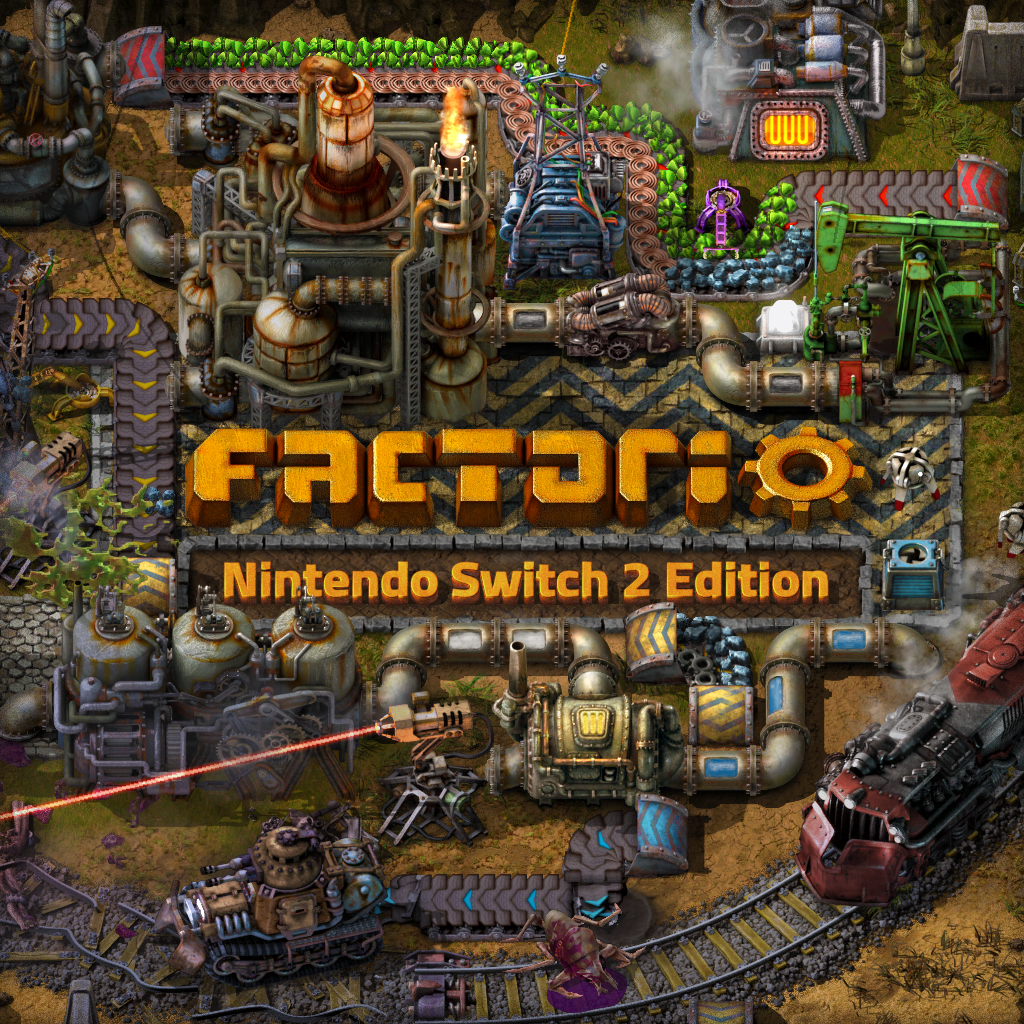
Friday Facts #439 - Factorio and Space Age on Nintendo Switch 2™ | Factorio
Hello, it has been a while since we've talked.
factorio.comHandheld Sweet Spots
Portable mode clicks for short, bounded tasks. Fix resource bottleneck, tidy chest contents, bump research queue, patch walls and turrets—that's handheld candy. Bite-sized chunks mean "5 mins on ore sorting" before bed keeps the factory moving. Your base doesn't stall.
Speaking from experience, maintenance beats redesign on handheld. Rather than re-sketching layouts from scratch, shuffling blueprint orders, checking stockpiles, topping ammo, repairing broken defences—that's portable-friendly work. Hands-off operation chains through. Come back to dedicated play with prep locked in. That setup cost compounds.
💡 Tip
Portable mode leans "executing tasks" over "pondering strategy." Small repairs, research swaps, supply runs—chipping away stacks progress in short bursts.
Basically, PC for precision builds, Switch for operational upkeep splits really cleanly. Precision work especially—tweaking automation at pixel-level or reworking blueprints entirely—hits different on PC. But managing defences from bed, advancing tech on the train, supply runs in small windows? Pure Switch. Lose out on polish, gain thousands of extra touches. That math favours handheld for volume players.
Save Sharing, Cross-Play, Version Alignment Gotchas
Save Compatibility Basics
Wanting to cross between Switch and PC hinges first on save files are cross-compatible by design. You can progress on one platform, then continue on the other under conditions. Super convenient. But compatibility ≠ always just opening. Version matching is the kingpin.
I got burned here myself. PC updated to newest first, then trying to rejoin Switch later didn't mesh. The reflex "align to PC" actually backfires—match Switch version instead keeps friction minimal. Especially co-play: updating PC first before coordinating with Switch invites disaster.
Second catch: no direct transfer feature exists. Not one-button cloud sync like you might expect. Instead, hand off through multiplayer is the actual path. Nintendo Switch version - Factorio Wiki and Nintendo Switch version - Factorio Wiki (English) both lead with this; understanding the handoff mechanics first makes the flow logical.
Actual Transfer Steps
Honestly, procedure beats theory here. Base sequence: Match PC version to Switch → Host opens multiplayer → Other joins → Disconnect and save carries over. Blueprints share the same way.
Want Switch→PC migration? Plug Switch progress as the host room, PC joins in. Reverse works too, but "updated PC only" derails it fast. In short: muddled updates = "it should work but doesn't" trap.
Multiplayer-mediated transfer feels less like copy-paste, more like "hop into the same world and sync state." Fits well with "PC for design details, Switch for upkeep" splits. I've run heavy rail layouts and tweaks on PC, then moved maintenance and defence patching to Switch; swaps feel smooth this way. PC and Switch as role partners rather than clones work really nicely.
💡 Tip
Handoff glitches drop dramatically once you pick "which is primary" upfront. Paired play works smoother with Switch as the version anchor; keeps miscues rare.
Cross-Play Conditions and Player Count
Cross-play itself works—Switch and PC share a world, cooperate building factories. factorio@jp Wiki reports max 64 players across platforms—loads of headroom for groups. Actually the cap less matters than hitting version parity first—already hammered, but worth re-emphasis.
Nintendo Switch Online is required for Switch multiplayer. Not a separate connection method; just standard online. PC and Switch playing together is straightforward as-is.
But "crossable" and "sustainably playable" split. Compatibility exists yet enormous worlds slug on Switch. 100MB map cap already mentioned—super-sized PC works won't move cleanly. "I want to haul my megabase everywhere" hits a wall. Compatibility lets you try, but scaling realities are separate.

Nintendo Switch版について - factorio@jp Wiki*
factorio@jp Wiki*
wikiwiki.jpTroubleshooting Workflow
Won't connect, can't hand off, won't load—parse this one step at a time, don't sprawl guesses. Version mismatch is the first check and catches most Switch↔PC tangles. From experience, crossplay hiccups almost always trace here—one side updated, now they're out of sync. Boom, won't cooperate.
Next suspect: any mods or tweaks running on PC? PC environments pack tweaks easily, and that exact luggage breaks Switch sync. Savegame PC opens fine locally but hits a wall when coordinating with handheld. Mod check stops this dead.
Actual load failure? Map too chunky? Save compatibility exists; Switch-side feasibility doesn't match. Giant rail sprawl or end-game entity density past PC's build scale? Incompatible isn't the word—porting-impossible is closer. PC factories hit densities handheld chokes on.
Cut through this by checking 1. Version match, 2. Mod presence, 3. Map size in order. Get those locked and the fault surfaces quickly. Rushing a PC update before syncing is poison here, the opposite of what it seems.
Space Age and Switch 2 Edition Current Status
Compatibility Timeline
October 21, 2024 saw Factorio: Space Age land, but initially Switch 1 drew no support. Space Age - Factorio Wiki and Friday Facts #439 both confirm—hardware caps took Switch 1 out. That's now crystal-clear, no hedging: Space Age on Switch needs Switch 2. DLC lists around $35 USD.
Next milestone: December 22, 2025 brings Nintendo Switch 2 Edition—not just "it runs," but tech-rebuilt and optimised specifically. Nintendo Switch version - Factorio Wiki (English) and official blog posts confirm Switch 2 now formally supports Space Age.
Playfeel shifts sharply too. Space Age spans planets juggling logistics, so it's not "playable if it boots"—it's "smooth progression hopping worlds and multiplayer." Switch 2 handles that decently; planets feel accessible, 4-player groups don't tank tempo. Really matters here—Space Age gets heavier late-game, so capability maps to comfort directly.
Switch 2 Performance and 4K Tuning
Switch 2 targets reasonable-scale Space Age completion. 4K TV hookup leans performance, dialling some rendering down. Official guidance points that direction, though specific setting names (UI label variance) and values differ per build—not exhaustively listed in docs. Community reports flag things like "light occlusion" toggle helping, but that's crowdsourced intel. Check live settings and official word before tuning rendering; that's the safe move.
Operational leap is sharp too. Official posts confirm Joy-Con 2 mouse-sensor support enabling mouse-mode controls. External USB/Bluetooth mice get community reports of working, but official docs don't clearly state external mouse compatibility. Test external mice on hardware if you plan that route.
💡 Tip
Space Age on Switch 2: handheld-first? Joy-Con mouse shines. Docked big base? Dial rendering down. Both angles work.
Upgrade Policy and Pricing Notes
Official word says Switch 1 owners get free Switch 2 Edition upgrade. Some regions or shop pages report price variance though (regional/storefront differences)—real store displays vary regionally. Confirm current My Nintendo Store / regional eShop prices (screenshot for certainty) if citing exact figures. Space Age's official baseline sits $35 USD.
Current framing: Switch 1 = campaign-focused, Switch 2 = campaign + Space Age. Clean split. Plus Switch 2 Edition isn't just compatibility—it's rebuilt with optimisation, 4K rendering tweaks, Joy-Con mouse support baked in. Pre-2024 intel misses this shift badly.
Platform Pick: Switch 1, Switch 2, or PC—Which Fits You?
Switch 1: Right For...
Handheld-first, thorough campaign play lands on Switch 1. Travel time, pre-sleep unwind, steady factory stretching—that angle still works now. Factorio rewards tiny additions (extra miner, belt tweak), so handheld fit stays real.
Initial friction: likely not performance—it's control feel. Switch isn't "PC mouse port"—it's toggle free/auto cursor mid-build tuned gameplay. Master that toggle (right stick press switches modes), and chaos drops massively. Auto-cursor grabs stuff, free-cursor lets you aim freehand. Pin that split down initially and early games smooth enormously.
Big win: range colour-shift clarity. Placed something and nothing happened? Usually out-of-range, not broken controls. Learn to eyeball that hue and "control broken" confusion evaporates. First day I got this, the game clicked.
Switch 2: Right For...
Space Age goals, or long-term commitment from day-one both point Switch 2. Handheld keeps, but experience breadth opens. Expansion-included means platform swap won't block your path later. Pretty solid upside.
Operationally, Switch 2 isn't "PC controls reborn"—it's vanilla Switch plus mouse aid. Base toggle-mode stays; Joy-Con 2 mouse adds precision without replacing the fundamentals. Inventory ops and micro-tweaks gain speed, but long-term fine detail work still prefers desktop mouse. Joy-Con fatigue creeps in past a point regular mice don't hit. UI shuffling and quick fixes? Gains big. Serious blueprint grinding? Still PC's territory.
So Switch 2 is best read as "Switch base + mouse boost," not "alternative PC." Right stick toggle lives; range-colour reading still guides you. Joy-Con 2 just gives you another lane for certain jobs. Mesh better.
PC: Right For...
MOD interest, factory-to-megabase scale, input comfort-first land here. MODs especially drive PC uniquely—deep dive into Krastorio 2, Industrial Revolution 3, overhaul ecosystems. Switches can't touch that realm.
Biggest shift from Switch: mouse operation bandwidth. Placed instantly where aimed, UI zips faster, precision hits. Middle-game onwards factories demand placing countless items cleanly. Cumulative, that difference becomes felt.
PC also teams nicely with multiplayer groups already on it—version uniformity makes collaborative headaches vanish. One-platform groups dodge mixup hazard entirely. Role-split works too if you do both: "PC anchors the big logic, Switch runs upkeep"—genuinely comfortable mixed-mode.
Decision Framework When Uncertain
Four pillars settle it: portability, input feel, expansion scope, long-term ceiling.
External play heavy? Switch series climbs. In-coffee/travel slivers? Handheld wins. Home desk only? PC clears.
Input: Does toggle-between-modes + colour-cues work for you, or do you need "pixel-perfect instant placement"? Handheld vs. desktop.
Expansion: MOD-curious means PC. Space Age interested? Switch 2 or PC. Vanilla enough? Any platform.
Ceiling: Megatons of hours funnelling into one 500-hour megabase? PC. Normal long-play? Switch 2 stable.
💡 Tip
Switch debut? Get cursor-toggle and building basics into muscle memory first. That's the gate. Cross it, and handhelds sing.
Official https://wiki.factorio.com/ and community guides sharpen early rough edges loads.
Summary
Factorio genuinely plays well on Switch. Pick "best" and it depends—what matters most to you changes platform fit. Portability → Nintendo Switch. Expansion and big bases → PC. Long-term plus Space Age → Switch 2 or PC.
Switch entry road: nail cursor toggle and range-colour reading first. Mixed-device play? Version-lock matters more than platform mix—prioritise that upfront to skip headaches. Next stop: early-game factory ops and research sequencing to hit consistent progress regardless of screen.
Reference: https://wiki.factorio.com/ and major community guides round out foundation gaps nicely.
RinSeo
Factorio 2,000時間超。100駅以上の列車ネットワーク運用実績と Death World マラソンクリアの経験から、物流・防衛の実践ノウハウをお届けします。
Схожі статті
【Factorio】MOD Compatibility Check Guide and Safe Combinations
【Factorio】MOD Compatibility Check Guide and Safe Combinations
Factorio Blueprint Distribution Sites: Top 4 Picks for 2.0【2.0 Compatible】
Factorio Blueprint Distribution Sites: Top 4 Picks for 2.0【2.0 Compatible】
3 Tips for Creating Factorio Blueprints
3 Tips for Creating Factorio Blueprints
Factorio Blueprint Book Organization Guide | 3-Classification Template